
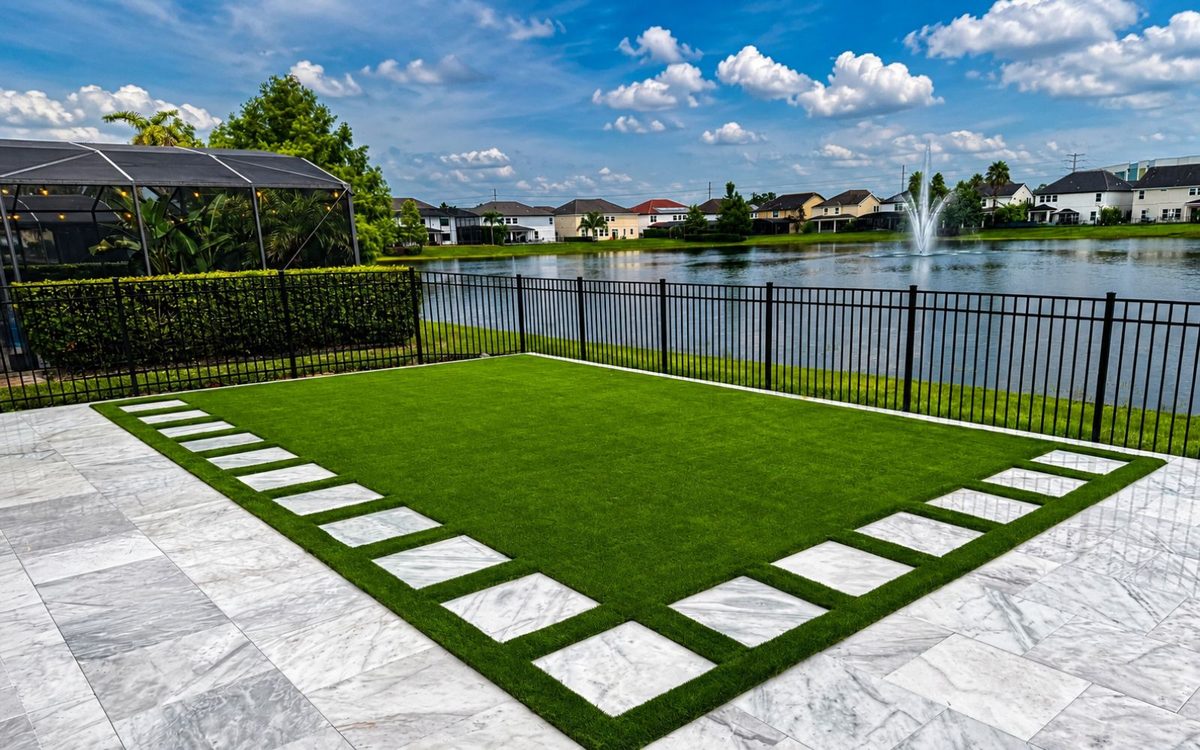
It's one of the first things Central Florida homeowners ask before switching to artificial grass: what happens when it rains? With our afternoon thunderstorms and summer downpours, nobody wants a yard that turns into a puddle. The good news is that quality artificial grass is built to drain, and it often handles water better than a natural lawn.
Does Artificial Grass Drain Well?
Yes. Modern artificial grass is designed to let water pass straight through it. The backing is perforated with thousands of tiny drainage holes, so rain flows through the turf, into the base beneath it, and away, instead of pooling on the surface.
A well-installed system can drain around 30 inches of water per hour, and many drain even faster. That's far more than even Florida's heaviest downpours ever produce, which is why a quality turf lawn handles our storms so well.
How the Drainage System Works
Good drainage is about what's underneath as much as the turf itself. A proper installation is built in layers: a compacted aggregate (crushed stone) base that stays stable while letting water move freely, often topped with a finer leveling layer such as decomposed granite that helps spread water evenly.
The perforated turf backing sits on top of that base. When it rains, water drains down through the holes, through the aggregate, and into the ground below, the same path natural rainwater would take through soil.
What Happens During a Heavy Florida Downpour?
Central Florida is known for intense afternoon thunderstorms, but even our heaviest bursts rarely exceed a few inches of rain per hour, comfortably within what a properly installed turf system can handle.
Because the water drains straight through instead of sitting on top of compacted soil, most artificial lawns are ready to use again within minutes of the rain stopping. No mud, no soggy low spots, and no waiting days for the yard to dry out.
No Standing Water, No Mud, Fewer Mosquitoes
Standing water is more than a nuisance in Florida, puddles are exactly where mosquitoes breed. Because artificial grass drains instead of holding water, it removes those puddles and helps cut down on mosquito breeding spots around your home.
It also eliminates the muddy patches and bare, worn areas that natural lawns develop after a storm, and it stays a firmer, less slippery surface for kids and pets once the rain passes.
Getting Drainage Right in Central Florida
Drainage performance ultimately comes down to installation. Florida's flat lots, sandy soil, and high water table make correct grading and a well-built base essential, that's what keeps water moving away from your home instead of toward it.
At Rhino Grass, we assess your yard's slope, soil, and any problem areas, then build the base to match so your lawn drains properly through every rainy season. Reach out for a free estimate and honest, local advice.
Frequently Asked Questions
Yes. Its perforated backing and gravel base let water flow straight through. A well-installed system can drain around 30 inches per hour, more than even Florida's heaviest storms produce.
No, when it's installed correctly. Rain drains through the turf into the base below instead of sitting on top, so you won't get the puddles or soggy spots a natural lawn develops.
Usually within minutes. Because water drains straight through rather than soaking into compacted soil, the surface is ready to walk or play on almost right away, with no mud.
Indirectly, yes. By draining water instead of holding puddles, it removes the standing water where mosquitoes breed, a real advantage in the Florida climate.
Most yards drain well with a properly built aggregate base and correct grading. Some low or problem areas benefit from added drainage, which we assess during your free estimate.