Choosing between artificial turf and natural grass is one of the biggest lawn decisions Central Florida homeowners face. Both have real strengths, and the right choice depends on your budget, your yard, and how you want to spend your time. This guide compares the two fairly on cost, care, and how each holds up in the Florida climate.
Upfront Cost: Sod Is Cheaper to Start
There's no way around it: natural grass costs less on day one. Laying sod is relatively inexpensive up front, which makes it appealing if you need a green yard quickly and want to keep initial spending low.
Artificial turf is a larger initial investment. Installed cost typically runs $6 to $22 per square foot, with most quality residential projects landing around $8 to $15 per square foot. That's higher than sod at the outset, but the number tells only half the story. What sod saves you today, it tends to ask back over the years in ongoing upkeep.
Ongoing Maintenance and Long-Term Cost
Natural grass is a living surface, so it carries continuous costs: watering, mowing, fertilizing, pest and weed control, and periodic reseeding. Those expenses and hours add up season after season, and in Florida the watering alone can be significant.
Artificial turf flips that equation. It needs no irrigation, no weekly mowing, and no fertilizing, which is where the savings accrue over time. The higher upfront cost is offset gradually, with payback building over years rather than showing up immediately. If you'd rather spend weekends enjoying your yard than maintaining it, turf makes a strong case.
Performance in the Central Florida Climate
Central Florida is a demanding place to keep a lawn green. Intense sun and UV, heavy summer rain, sandy soil, deep shade under trees, and persistent pests all work against natural grass, and many homeowners struggle to keep it looking healthy year-round.
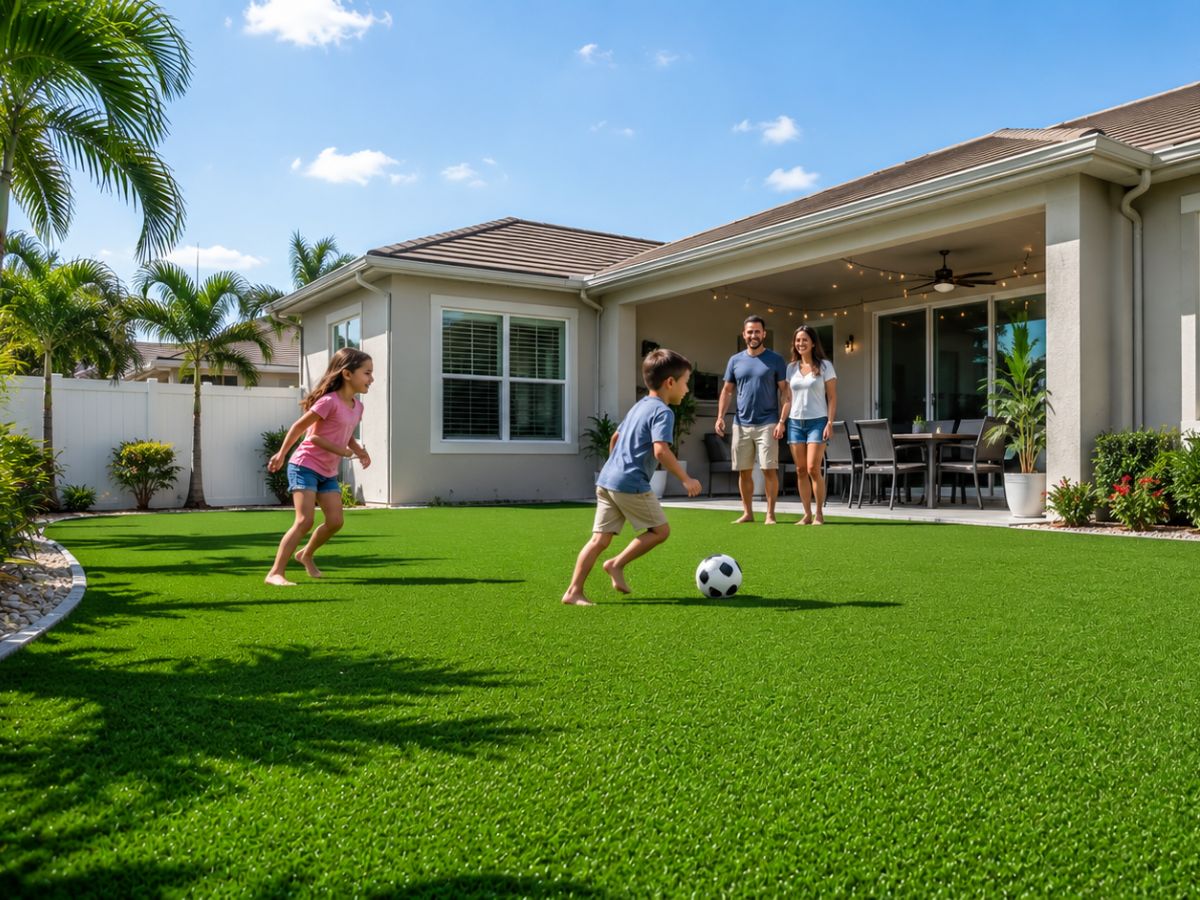
Artificial turf sidesteps most of those challenges. It stays green through every season, drains fast after heavy storms, and never needs irrigation to survive a dry spell. In fairness to natural grass, a healthy living lawn stays cooler in direct sun and repairs itself over time. Turf can get hotter in direct sunlight, though a quick rinse or some shade brings the surface temperature back down.
Water Use, Restrictions, and the Environment
Water is one of the larger ongoing costs of a Florida lawn, and it's also where turf delivers a clear, measurable difference. Artificial turf uses no irrigation at all, eliminating that recurring expense entirely.
Florida water restrictions can also limit how often you're allowed to water a lawn, which puts natural grass at a disadvantage during dry periods and favors turf that needs none. On the other side, natural grass is a living system with the environmental benefits that come with it. Both perspectives are valid; the right weight depends on your priorities.
Which Is Right for You?
If your priority is the lowest possible upfront cost, a natural, self-repairing surface, or the feel of a living lawn, sod may be the better fit, provided you're ready for the ongoing watering, mowing, and treatment it requires. If you'd rather eliminate weekly maintenance, stop paying to irrigate, and keep a green yard through Florida's toughest weather, artificial turf is worth serious consideration.
Every yard is different, and the smartest way to compare is with real numbers for your property. Rhino Grass installs artificial turf across Orlando and Central Florida, offers free written estimates, and backs its installations with a 15-year limited warranty. We're happy to give you a straight, balanced answer for your specific situation.
Frequently Asked Questions
Natural grass is cheaper up front, since laying sod costs less initially. Artificial turf typically runs $6 to $22 per square foot installed (most quality residential jobs are around $8 to $15), but it saves on watering, mowing, and fertilizing over time, so the payback builds over years.
Yes. Turf stays green year-round, drains fast after heavy summer storms, and needs no irrigation. It handles intense sun, sandy soil, shade, and pests that make natural lawns hard to keep green here in Central Florida.
It can get hotter than a living lawn in direct sunlight. A quick rinse with water or some shade brings the surface temperature back down. Natural grass stays cooler in direct sun, which is a fair point in its favor.
Artificial turf needs no irrigation at all, so it eliminates one of the larger ongoing costs of a Florida lawn. This matters even more during water restrictions, when lawn watering may be limited and natural grass can suffer.
The best comparison uses real numbers for your property. Rhino Grass provides free written estimates across Orlando and Central Florida and backs installations with a 15-year limited warranty, so you can weigh turf against natural grass with confidence.